Buy xbedo.com ?
We are moving the project
xbedo.com .
Are you interested in purchasing the domain
xbedo.com ?
domain@kv-gmbh.de · 0541-91531010
Buy xbedo.com ?
What is the difference between Mobile TAN and Smart TAN?
Mobile TAN (mTAN) and Smart TAN are both methods of generating one-time passwords for online banking transactions. The main difference between the two is the method of receiving the TAN. With Mobile TAN, the one-time password is sent to the user's mobile phone via SMS. On the other hand, Smart TAN uses a dedicated device, often a small card reader or a smartphone app, to generate the TAN. While Mobile TAN relies on the user's mobile phone and network coverage, Smart TAN requires the use of a separate device, providing an extra layer of security. **
What is the task Show that tan(x1+x2) = (tan(x1) + tan(x2)) / (1 - tan(x1)tan(x2)) correct?
The task is to prove the trigonometric identity that tan(x1+x2) = (tan(x1) + tan(x2)) / (1 - tan(x1)tan(x2)). This involves using the sum of angles formula for tangent and manipulating the expression to show that the left-hand side is equal to the right-hand side. By simplifying both sides of the equation and showing that they are equal, we can confirm that the identity is correct. **

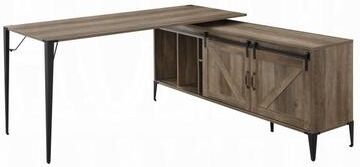
Similar search terms for CDecor-Nusha-Tan-and
Top-Angebote
Products related to CDecor-Nusha-Tan-and:
-
Jla Home/Furniture & Decor Caroline Storage Ottoman Tan , TanThe versatile Caroline Tan Storage Ottoman offers good looks, utility, and function. This wooden ottoman is beautifully covered in a tufted, heathered tan polyester fabric and is perfect in your living space. The cushioned top is great for sitting...285,00 $*Shipping: 0,00 $Secure redirect to the provider




-
What is the task of proving that tan(x1+x2) = (tan(x1) + tan(x2)) / (1 - tan(x1)tan(x2)) correct?
To prove that tan(x1+x2) = (tan(x1) + tan(x2)) / (1 - tan(x1)tan(x2)) is correct, one would need to use trigonometric identities such as the sum-to-product formula and the tangent addition formula. By manipulating the expressions using these identities, one can show that both sides of the equation are equivalent. It is important to carefully follow the steps of the proof and ensure that each manipulation is mathematically sound in order to confirm the correctness of the statement. **
-
What is the difference on a calculator between tan and tan^-1?
On a calculator, the tan function calculates the tangent of an angle, while the tan^-1 function (also known as arctan or inverse tangent) calculates the angle whose tangent is a given value. In other words, tan gives the ratio of the opposite side to the adjacent side of a right triangle, while tan^-1 gives the angle when the tangent of that angle is known. **
-
What is the difference in the calculator between tan and tan^-1?
The "tan" function on a calculator calculates the tangent of an angle, while "tan^-1" (or "arctan") calculates the angle whose tangent is a given number. In other words, "tan" takes an angle as input and gives the tangent of that angle as output, while "tan^-1" takes a number as input and gives the angle whose tangent is that number as output. Inverse trigonometric functions like "tan^-1" are used to find angles in right-angled triangles or to solve trigonometric equations. **
-
What is the task to show that tan(x1+x2) = (tan(x1) + tan(x2)) / (1 - tan(x1)tan(x2)) is correct?
To show that the equation tan(x1+x2) = (tan(x1) + tan(x2)) / (1 - tan(x1)tan(x2)) is correct, we can start by using the sum formula for tangent, which states that tan(x1+x2) = (tan(x1) + tan(x2)) / (1 - tan(x1)tan(x2)). We can then substitute the values of tan(x1) and tan(x2) into the equation and simplify both sides to see if they are equal. Finally, we can verify the result by checking if both sides of the equation are equal for different values of x1 and x2. **


What is SIN COS and TAN?
SIN, COS, and TAN are trigonometric functions used in mathematics to relate the angles of a right triangle to the lengths of its sides. - Sine (SIN) is the ratio of the length of the side opposite an angle to the length of the hypotenuse. - Cosine (COS) is the ratio of the length of the side adjacent to an angle to the length of the hypotenuse. - Tangent (TAN) is the ratio of the length of the side opposite an angle to the length of the side adjacent to the angle. These functions are fundamental in trigonometry and are used to solve various problems involving angles and sides of triangles. **
Why don't arms and legs tan?
Arms and legs don't tan as easily as other parts of the body because they are often covered by clothing, which blocks the sun's rays. Additionally, the skin on the arms and legs is thicker and has more melanin, the pigment that gives skin its color, which can make it more difficult for these areas to tan. The skin on the arms and legs also tends to be drier, which can make it more resistant to tanning. **
Top-Angebote
Products related to CDecor-Nusha-Tan-and:
-
Jla Home/Furniture & Decor Caroline Storage Ottoman Tan , TanThe versatile Caroline Tan Storage Ottoman offers good looks, utility, and function. This wooden ottoman is beautifully covered in a tufted, heathered tan polyester fabric and is perfect in your living space. The cushioned top is great for sitting...285,00 $*Shipping: 0,00 $Secure redirect to the provider
-
What is the difference between Mobile TAN and Smart TAN?
Mobile TAN (mTAN) and Smart TAN are both methods of generating one-time passwords for online banking transactions. The main difference between the two is the method of receiving the TAN. With Mobile TAN, the one-time password is sent to the user's mobile phone via SMS. On the other hand, Smart TAN uses a dedicated device, often a small card reader or a smartphone app, to generate the TAN. While Mobile TAN relies on the user's mobile phone and network coverage, Smart TAN requires the use of a separate device, providing an extra layer of security. **
-
What is the task Show that tan(x1+x2) = (tan(x1) + tan(x2)) / (1 - tan(x1)tan(x2)) correct?
The task is to prove the trigonometric identity that tan(x1+x2) = (tan(x1) + tan(x2)) / (1 - tan(x1)tan(x2)). This involves using the sum of angles formula for tangent and manipulating the expression to show that the left-hand side is equal to the right-hand side. By simplifying both sides of the equation and showing that they are equal, we can confirm that the identity is correct. **
-
What is the task of proving that tan(x1+x2) = (tan(x1) + tan(x2)) / (1 - tan(x1)tan(x2)) correct?
To prove that tan(x1+x2) = (tan(x1) + tan(x2)) / (1 - tan(x1)tan(x2)) is correct, one would need to use trigonometric identities such as the sum-to-product formula and the tangent addition formula. By manipulating the expressions using these identities, one can show that both sides of the equation are equivalent. It is important to carefully follow the steps of the proof and ensure that each manipulation is mathematically sound in order to confirm the correctness of the statement. **
-
What is the difference on a calculator between tan and tan^-1?
On a calculator, the tan function calculates the tangent of an angle, while the tan^-1 function (also known as arctan or inverse tangent) calculates the angle whose tangent is a given value. In other words, tan gives the ratio of the opposite side to the adjacent side of a right triangle, while tan^-1 gives the angle when the tangent of that angle is known. **
Similar search terms for CDecor-Nusha-Tan-and
-
What is the difference in the calculator between tan and tan^-1?
The "tan" function on a calculator calculates the tangent of an angle, while "tan^-1" (or "arctan") calculates the angle whose tangent is a given number. In other words, "tan" takes an angle as input and gives the tangent of that angle as output, while "tan^-1" takes a number as input and gives the angle whose tangent is that number as output. Inverse trigonometric functions like "tan^-1" are used to find angles in right-angled triangles or to solve trigonometric equations. **
-
What is the task to show that tan(x1+x2) = (tan(x1) + tan(x2)) / (1 - tan(x1)tan(x2)) is correct?
To show that the equation tan(x1+x2) = (tan(x1) + tan(x2)) / (1 - tan(x1)tan(x2)) is correct, we can start by using the sum formula for tangent, which states that tan(x1+x2) = (tan(x1) + tan(x2)) / (1 - tan(x1)tan(x2)). We can then substitute the values of tan(x1) and tan(x2) into the equation and simplify both sides to see if they are equal. Finally, we can verify the result by checking if both sides of the equation are equal for different values of x1 and x2. **
-
What is SIN COS and TAN?
SIN, COS, and TAN are trigonometric functions used in mathematics to relate the angles of a right triangle to the lengths of its sides. - Sine (SIN) is the ratio of the length of the side opposite an angle to the length of the hypotenuse. - Cosine (COS) is the ratio of the length of the side adjacent to an angle to the length of the hypotenuse. - Tangent (TAN) is the ratio of the length of the side opposite an angle to the length of the side adjacent to the angle. These functions are fundamental in trigonometry and are used to solve various problems involving angles and sides of triangles. **
-
Why don't arms and legs tan?
Arms and legs don't tan as easily as other parts of the body because they are often covered by clothing, which blocks the sun's rays. Additionally, the skin on the arms and legs is thicker and has more melanin, the pigment that gives skin its color, which can make it more difficult for these areas to tan. The skin on the arms and legs also tends to be drier, which can make it more resistant to tanning. **
* All prices are inclusive of VAT and, if applicable, plus shipping costs. The offer information is based on the details provided by the respective shop and is updated through automated processes. Real-time updates do not occur, so deviations can occur in individual cases. ** Note: Parts of this content were created by AI.