Buy xbedo.com ?
We are moving the project
xbedo.com .
Are you interested in purchasing the domain
xbedo.com ?
domain@kv-gmbh.de · 0541-91531010
Buy xbedo.com ?
Which atomic shells do lanthanides and actinides fill?
Lanthanides fill the 4f subshell, while actinides fill the 5f subshell. These subshells are part of the inner transition metals and are located in the f-block of the periodic table. The filling of these subshells occurs after the filling of the 6s and 5d subshells for lanthanides and actinides, respectively. **
What is the electron configuration of the lanthanides?
The electron configuration of the lanthanides is [Xe] 4f1-14 5d0-1 6s2. This configuration represents the filling of the 4f sublevel, which occurs as the atomic number increases from 58 to 71. The 4f sublevel can hold a maximum of 14 electrons, and as the lanthanide series progresses, the 4f sublevel fills up with electrons. This unique electron configuration gives the lanthanides their characteristic properties, such as similar chemical behavior and the ability to form colorful compounds. **


Similar search terms for Lanthanides
Top-Angebote
Products related to Lanthanides:
-
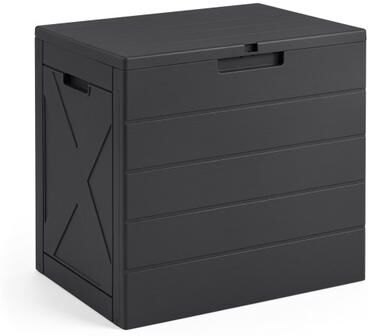
Costway 25 Gallon Storage Bin with Lid Carry Handles and Lock Hole for Patio Furniture Accessories-BlackTurn clutter into curb appeal with this 25-gallon outdoor deck storage box, which is made to hold everything from garden tools and pool gear to patio extras, packages, and everyday essentials.35,99 $*Shipping: 0,00 $Secure redirect to the provider
-
Fortnite Light Gaming Locker with LED Lighting by Numskull Designs, Officially Licensed, Storage for Games, Controllers, and AccessoriesKeep your gaming setup organized with the officially licensed Fortnite Light Gaming Locker from Numskull. This storage locker is designed to hold your games, controllers, headphones, and smaller gaming accessories. It features a practical storage space with Fortnite artwork and integrated LED lighting that can be controlled with a touch. The locker can store up to 10 games or films, holds up to four controllers, and has top-mounted headphone storage. The adjustable or removable internal shelving allows you to configure the space to fit your needs, and the magnetic door closure keeps everything secure. The locker is powered via USB-C and comes with a supplied cable. Made from plastic, this locker provides dedicated space for your gaming essentials, including a lower drawer for storing cables, remotes, and other smaller items. The illuminated Fortnite panel adds a distinctive display feature to a gaming room or entertainment area.25,59 £*Shipping: 3,95 £Secure redirect to the provider
-
Jla Home/Furniture & Decor Caroline Storage Ottoman Blue Shadow , Blue ShadowThe versatile Caroline Blue Shadow Storage Ottoman offers good looks, utility, and function. This wooden ottoman is beautifully covered in a tufted, heathered blue shadow polyester fabric and is perfect in your living space. The cushioned top is...285,00 $*Shipping: 0,00 $Secure redirect to the provider
-
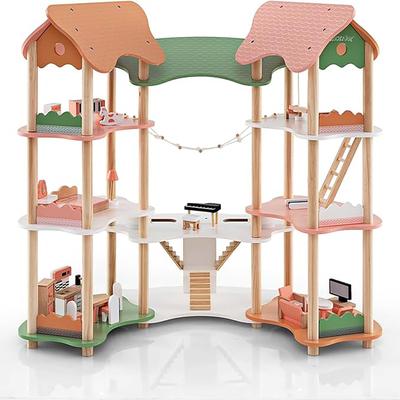
Kids Wooden Dollhouse Aged 3-8 w/ 32PCS Furniture AccessoriesGift your kids an enchanting world with our doll house! Featuring 3 tiers and 7 rooms, our doll house playset turns any nook of your child's room into a whimsical haven of delight.162,99 $*Shipping: 0,00 $Secure redirect to the provider


-
How are transition metals, lanthanides, and actinides actually formed?
Transition metals, lanthanides, and actinides are formed through nuclear fusion processes in the cores of stars. During the later stages of a star's life cycle, heavier elements are produced through fusion reactions, including transition metals, lanthanides, and actinides. When a massive star reaches the end of its life and undergoes a supernova explosion, these elements are scattered into space, eventually forming new stars and planetary systems where these elements are incorporated into their composition. **
-
How are the transition metals, lanthanides, and actinides actually formed?
Transition metals, lanthanides, and actinides are formed through nuclear fusion processes in the cores of stars. During the later stages of a star's life cycle, heavier elements are formed through fusion reactions, including the elements that make up the transition metals, lanthanides, and actinides. These elements are then released into space through processes like supernova explosions, where they can eventually become part of new stars, planets, and other celestial bodies. Over billions of years, these elements have been incorporated into the Earth's crust, where they can be found in various minerals and ores. **
-
How do secondary groups or even the lanthanides and actinides actually form?
Secondary groups are formed when the outermost electron shell of an atom is not completely filled, leading to the formation of chemical bonds with other atoms to achieve stability. Lanthanides and actinides are part of the inner transition elements and are characterized by the filling of the 4f and 5f orbitals, respectively. These elements form due to the unique electronic configurations of their outermost electron shells, allowing them to exhibit a wide range of chemical properties and form complex compounds. **
-
With which electrons do the actinides and the lanthanides fill their shells?
The actinides and lanthanides fill their shells with f-electrons. These are the inner transition metals, and their unique electronic configuration allows them to fill their outermost shells with f-electrons. This gives them their characteristic properties, such as high reactivity and the ability to form complex compounds. **


How are the transition metals or even the lanthanides and actinides actually formed?
Transition metals, lanthanides, and actinides are formed through nuclear fusion processes in the cores of massive stars. During the later stages of a star's life, when it runs out of hydrogen fuel, it begins to fuse heavier elements like helium, carbon, and oxygen. This fusion process continues, creating even heavier elements like iron, nickel, and zinc, which eventually lead to the formation of transition metals, lanthanides, and actinides. These elements are then dispersed into space through supernova explosions, enriching the interstellar medium and providing the raw materials for the formation of new stars and planets. **
How can I determine the valence of the lanthanides and the transition metals from this periodic table?
The valence of the lanthanides and transition metals can be determined by looking at their group number in the periodic table. Lanthanides are located in the f-block of the periodic table and have a valence of +3. Transition metals are located in the d-block of the periodic table and their valence can vary, but is often determined by their group number. For example, elements in group 1 have a valence of +1, while elements in group 2 have a valence of +2. **
Top-Angebote
Products related to Lanthanides:
-
Jla Home/Furniture & Decor Caymus Storage Bench Gray , GrayThe Caymus Storage Bench offers a chic simplicity designed by Martha Stewart. With natural-finished wood legs, the bench features a wide upholstered design in light gray woven polyester with piped accents. The 3.25 thick, foam-filled cushion also...299,99 $*Shipping: 0,00 $Secure redirect to the provider
-
Jla Home/Furniture & Decor Caroline Storage Ottoman Tan , TanThe versatile Caroline Tan Storage Ottoman offers good looks, utility, and function. This wooden ottoman is beautifully covered in a tufted, heathered tan polyester fabric and is perfect in your living space. The cushioned top is great for sitting...285,00 $*Shipping: 0,00 $Secure redirect to the provider
-
Costway 25 Gallon Storage Bin with Lid Carry Handles and Lock Hole for Patio Furniture Accessories-BlackTurn clutter into curb appeal with this 25-gallon outdoor deck storage box, which is made to hold everything from garden tools and pool gear to patio extras, packages, and everyday essentials.35,99 $*Shipping: 0,00 $Secure redirect to the provider
-
Fortnite Light Gaming Locker with LED Lighting by Numskull Designs, Officially Licensed, Storage for Games, Controllers, and AccessoriesKeep your gaming setup organized with the officially licensed Fortnite Light Gaming Locker from Numskull. This storage locker is designed to hold your games, controllers, headphones, and smaller gaming accessories. It features a practical storage space with Fortnite artwork and integrated LED lighting that can be controlled with a touch. The locker can store up to 10 games or films, holds up to four controllers, and has top-mounted headphone storage. The adjustable or removable internal shelving allows you to configure the space to fit your needs, and the magnetic door closure keeps everything secure. The locker is powered via USB-C and comes with a supplied cable. Made from plastic, this locker provides dedicated space for your gaming essentials, including a lower drawer for storing cables, remotes, and other smaller items. The illuminated Fortnite panel adds a distinctive display feature to a gaming room or entertainment area.25,59 £*Shipping: 3,95 £Secure redirect to the provider
-
Which atomic shells do lanthanides and actinides fill?
Lanthanides fill the 4f subshell, while actinides fill the 5f subshell. These subshells are part of the inner transition metals and are located in the f-block of the periodic table. The filling of these subshells occurs after the filling of the 6s and 5d subshells for lanthanides and actinides, respectively. **
-
What is the electron configuration of the lanthanides?
The electron configuration of the lanthanides is [Xe] 4f1-14 5d0-1 6s2. This configuration represents the filling of the 4f sublevel, which occurs as the atomic number increases from 58 to 71. The 4f sublevel can hold a maximum of 14 electrons, and as the lanthanide series progresses, the 4f sublevel fills up with electrons. This unique electron configuration gives the lanthanides their characteristic properties, such as similar chemical behavior and the ability to form colorful compounds. **
-
How are transition metals, lanthanides, and actinides actually formed?
Transition metals, lanthanides, and actinides are formed through nuclear fusion processes in the cores of stars. During the later stages of a star's life cycle, heavier elements are produced through fusion reactions, including transition metals, lanthanides, and actinides. When a massive star reaches the end of its life and undergoes a supernova explosion, these elements are scattered into space, eventually forming new stars and planetary systems where these elements are incorporated into their composition. **
-
How are the transition metals, lanthanides, and actinides actually formed?
Transition metals, lanthanides, and actinides are formed through nuclear fusion processes in the cores of stars. During the later stages of a star's life cycle, heavier elements are formed through fusion reactions, including the elements that make up the transition metals, lanthanides, and actinides. These elements are then released into space through processes like supernova explosions, where they can eventually become part of new stars, planets, and other celestial bodies. Over billions of years, these elements have been incorporated into the Earth's crust, where they can be found in various minerals and ores. **
Similar search terms for Lanthanides
-
Jla Home/Furniture & Decor Caroline Storage Ottoman Blue Shadow , Blue ShadowThe versatile Caroline Blue Shadow Storage Ottoman offers good looks, utility, and function. This wooden ottoman is beautifully covered in a tufted, heathered blue shadow polyester fabric and is perfect in your living space. The cushioned top is...285,00 $*Shipping: 0,00 $Secure redirect to the provider
-
Kids Wooden Dollhouse Aged 3-8 w/ 32PCS Furniture AccessoriesGift your kids an enchanting world with our doll house! Featuring 3 tiers and 7 rooms, our doll house playset turns any nook of your child's room into a whimsical haven of delight.162,99 $*Shipping: 0,00 $Secure redirect to the provider
-
Costway 25 Gallon Storage Bin with Lid Carry Handles and Lock Hole for Patio Furniture Accessories-BrownTurn clutter into curb appeal with this 25-gallon outdoor deck storage box, which is made to hold everything from garden tools and pool gear to patio extras, packages, and everyday essentials.35,99 $*Shipping: 0,00 $Secure redirect to the provider
-
How do secondary groups or even the lanthanides and actinides actually form?
Secondary groups are formed when the outermost electron shell of an atom is not completely filled, leading to the formation of chemical bonds with other atoms to achieve stability. Lanthanides and actinides are part of the inner transition elements and are characterized by the filling of the 4f and 5f orbitals, respectively. These elements form due to the unique electronic configurations of their outermost electron shells, allowing them to exhibit a wide range of chemical properties and form complex compounds. **
-
With which electrons do the actinides and the lanthanides fill their shells?
The actinides and lanthanides fill their shells with f-electrons. These are the inner transition metals, and their unique electronic configuration allows them to fill their outermost shells with f-electrons. This gives them their characteristic properties, such as high reactivity and the ability to form complex compounds. **
-
How are the transition metals or even the lanthanides and actinides actually formed?
Transition metals, lanthanides, and actinides are formed through nuclear fusion processes in the cores of massive stars. During the later stages of a star's life, when it runs out of hydrogen fuel, it begins to fuse heavier elements like helium, carbon, and oxygen. This fusion process continues, creating even heavier elements like iron, nickel, and zinc, which eventually lead to the formation of transition metals, lanthanides, and actinides. These elements are then dispersed into space through supernova explosions, enriching the interstellar medium and providing the raw materials for the formation of new stars and planets. **
-
How can I determine the valence of the lanthanides and the transition metals from this periodic table?
The valence of the lanthanides and transition metals can be determined by looking at their group number in the periodic table. Lanthanides are located in the f-block of the periodic table and have a valence of +3. Transition metals are located in the d-block of the periodic table and their valence can vary, but is often determined by their group number. For example, elements in group 1 have a valence of +1, while elements in group 2 have a valence of +2. **
* All prices are inclusive of VAT and, if applicable, plus shipping costs. The offer information is based on the details provided by the respective shop and is updated through automated processes. Real-time updates do not occur, so deviations can occur in individual cases. ** Note: Parts of this content were created by AI.