Buy xbedo.com ?
We are moving the project
xbedo.com .
Are you interested in purchasing the domain
xbedo.com ?
domain@kv-gmbh.de · 0541-91531010
Buy xbedo.com ?
What is the difference between a power take-off shaft and a drive shaft?
A power take-off (PTO) shaft is a type of drive shaft that transfers power from a vehicle's engine to an attachment or implement, such as a pump or generator. The main difference between a PTO shaft and a regular drive shaft is that a PTO shaft is specifically designed to transfer power to external equipment, while a drive shaft is typically used to transfer power within a vehicle's transmission or between different components of a vehicle. Additionally, PTO shafts are often detachable and can be connected and disconnected as needed, whereas a drive shaft is a permanent component of a vehicle's drivetrain. **
Why are there no simple motorcycles with shaft drive or belt drive?
There are no simple motorcycles with shaft drive or belt drive because these systems are more complex and expensive to manufacture compared to chain drive systems. Chain drives are simpler, lighter, and more cost-effective, making them the preferred choice for most motorcycles. Additionally, chain drives offer easier maintenance and customization options, which are important factors for many motorcycle enthusiasts. Overall, the simplicity and efficiency of chain drives make them the more popular choice in the motorcycle industry. **

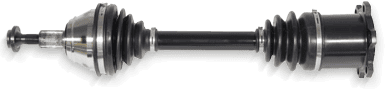
Similar search terms for MAXGEAR-49-1791-Drive-shaft
Top-Angebote
Products related to MAXGEAR-49-1791-Drive-shaft:
-
MAXGEAR 49-1194 Drive shaftExternal Toothing wheel side: 23; Length [mm]: 657; Diameter 1 [mm]: 95; Number of Teeth, ABS ring: 44; Fitting Position: Front Axle Left; Braking/Driving Dynamics: for vehicles with ABS; Construction Year from: 12/1996, 07/1998, 01/2000, 01/2001; Transmission Code: JC5, JB3;JC5; Construction Year to: 12/2002140,99 £*Shipping: 8,45 £Secure redirect to the provider
-
MAXGEAR 49-1090 Drive shaftFitting Position: Front Axle Left; Fitting Position: Front Axle; External Toothing wheel side: 38; Length [mm]: 525; Diameter 1 [mm]: 98; Diameter 2 [mm]: 125; Number of Teeth, ABS ring: 45; Transmission Type: Automatic Transmission; Vehicle Identification Number (VIN) to: 8E4195500; Braking/Driving Dynamics: for vehicles with ABS; Vehicle Identification Number (VIN) from: 8E-4-195500; Engine Code: BEX, BYK176,99 £*Shipping: 1,99 £Secure redirect to the provider


-
How to calculate the moment of inertia of the drive shaft?
To calculate the moment of inertia of the drive shaft, you need to know the mass of the shaft and its distribution along its length. The moment of inertia can be calculated using the formula I = ∫r^2 dm, where r is the distance from the axis of rotation to the element of mass dm. By integrating this formula over the entire length of the shaft, you can determine the moment of inertia of the drive shaft. Alternatively, you can also use the parallel axis theorem to calculate the moment of inertia if the shaft is not rotating about its center of mass. **
-
How do you calculate the moment of inertia of the drive shaft?
The moment of inertia of a drive shaft can be calculated using the formula for the moment of inertia of a solid cylinder, which is \( I = \frac{1}{2} m r^2 \), where \( m \) is the mass of the shaft and \( r \) is the radius of the shaft. If the drive shaft is not a solid cylinder, the moment of inertia can be calculated by summing the moments of inertia of its individual components using the parallel axis theorem. This involves calculating the moment of inertia of each component about its own center of mass and then adding the mass of each component multiplied by the square of the distance between its center of mass and the axis of rotation. **
-
Who held power in France in 1791?
In 1791, power in France was held by the National Assembly, which had been established after the French Revolution. The National Assembly was made up of representatives from the Third Estate, which included commoners and the middle class. The Assembly had been tasked with drafting a new constitution and making significant reforms to the French government and society. This marked a significant shift in power away from the absolute monarchy of King Louis XVI, who had been forced to accept the authority of the National Assembly. **
-
What is the French Constitution of 1791?
The French Constitution of 1791 was the first written constitution in France, adopted during the French Revolution. It established a constitutional monarchy, limiting the powers of the king and creating a unicameral legislature called the Legislative Assembly. The constitution also guaranteed basic rights and freedoms to the citizens of France, such as equality before the law and freedom of speech. However, it ultimately failed to bring stability to the country and was replaced by subsequent constitutions during the Revolution. **


Why did the French Revolution not end in 1791?
The French Revolution did not end in 1791 because the initial reforms and changes brought about by the revolution did not fully address the underlying social and economic issues in France. The monarchy was still in place, and tensions between the revolutionaries and the royalists continued to escalate. Additionally, the revolutionaries were divided among themselves, with different factions vying for power and influence. These factors, along with external pressures and the radicalization of the revolution, led to the continuation of the revolution beyond 1791. **
How long was the French Constitution of 1791 valid?
The French Constitution of 1791 was valid for just over a year. It was adopted on September 3, 1791, and remained in effect until September 20, 1792, when it was suspended following the overthrow of the monarchy and the establishment of the First French Republic. The constitution aimed to establish a constitutional monarchy and limit the powers of the king, but it ultimately proved to be short-lived due to the political instability and turmoil of the time. **
Top-Angebote
Products related to MAXGEAR-49-1791-Drive-shaft:
-
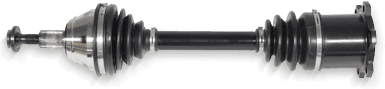
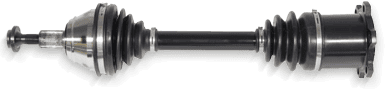
MAXGEAR 49-1791 Drive shaftFitting Position: Front Axle Left; Fitting Position: Front Axle, Front Axle Right; External Toothing wheel side: 38; Internal Gearing Differential Side (transmission connection): 26; Length [mm]: 647; Transmission-sided joint diameter [mm]: 108, 108,0; Wheel-sided joint diameter [mm]: 106; Thread Size: M20x1,5; Transmission Type: Manual Transmission, 6-Speed Manual Transmission; Construction Year to: 06/2013, 05/2013; Vehicle type: Caravelle, California, Transporter, TransporterShuttle; Construction Year from: 05/2007, 01/2008, 09/2009, 06/2005; Vehicle Identification Number (VIN) to: 7HA200000169,99 £*Shipping: 1,99 £Secure redirect to the provider
-
MAXGEAR 49-1110 Drive shaftExternal Toothing differential side: 21; External Toothing wheel side: 21; Length [mm]: 841; Diameter 1 [mm]: 79; Fitting Position: Front Axle Right; Transmission Type: Manual Transmission; Construction Year from: 06/2006, 09/2003, 01/2005; Transmission Code: MA, BE4R; Braking/Driving Dynamics: for vehicles without ABS134,99 £*Shipping: 8,45 £Secure redirect to the provider
-
MAXGEAR 49-1194 Drive shaftExternal Toothing wheel side: 23; Length [mm]: 657; Diameter 1 [mm]: 95; Number of Teeth, ABS ring: 44; Fitting Position: Front Axle Left; Braking/Driving Dynamics: for vehicles with ABS; Construction Year from: 12/1996, 07/1998, 01/2000, 01/2001; Transmission Code: JC5, JB3;JC5; Construction Year to: 12/2002140,99 £*Shipping: 8,45 £Secure redirect to the provider
-
MAXGEAR 49-1090 Drive shaftFitting Position: Front Axle Left; Fitting Position: Front Axle; External Toothing wheel side: 38; Length [mm]: 525; Diameter 1 [mm]: 98; Diameter 2 [mm]: 125; Number of Teeth, ABS ring: 45; Transmission Type: Automatic Transmission; Vehicle Identification Number (VIN) to: 8E4195500; Braking/Driving Dynamics: for vehicles with ABS; Vehicle Identification Number (VIN) from: 8E-4-195500; Engine Code: BEX, BYK176,99 £*Shipping: 1,99 £Secure redirect to the provider
-
What is the difference between a power take-off shaft and a drive shaft?
A power take-off (PTO) shaft is a type of drive shaft that transfers power from a vehicle's engine to an attachment or implement, such as a pump or generator. The main difference between a PTO shaft and a regular drive shaft is that a PTO shaft is specifically designed to transfer power to external equipment, while a drive shaft is typically used to transfer power within a vehicle's transmission or between different components of a vehicle. Additionally, PTO shafts are often detachable and can be connected and disconnected as needed, whereas a drive shaft is a permanent component of a vehicle's drivetrain. **
-
Why are there no simple motorcycles with shaft drive or belt drive?
There are no simple motorcycles with shaft drive or belt drive because these systems are more complex and expensive to manufacture compared to chain drive systems. Chain drives are simpler, lighter, and more cost-effective, making them the preferred choice for most motorcycles. Additionally, chain drives offer easier maintenance and customization options, which are important factors for many motorcycle enthusiasts. Overall, the simplicity and efficiency of chain drives make them the more popular choice in the motorcycle industry. **
-
How to calculate the moment of inertia of the drive shaft?
To calculate the moment of inertia of the drive shaft, you need to know the mass of the shaft and its distribution along its length. The moment of inertia can be calculated using the formula I = ∫r^2 dm, where r is the distance from the axis of rotation to the element of mass dm. By integrating this formula over the entire length of the shaft, you can determine the moment of inertia of the drive shaft. Alternatively, you can also use the parallel axis theorem to calculate the moment of inertia if the shaft is not rotating about its center of mass. **
-
How do you calculate the moment of inertia of the drive shaft?
The moment of inertia of a drive shaft can be calculated using the formula for the moment of inertia of a solid cylinder, which is \( I = \frac{1}{2} m r^2 \), where \( m \) is the mass of the shaft and \( r \) is the radius of the shaft. If the drive shaft is not a solid cylinder, the moment of inertia can be calculated by summing the moments of inertia of its individual components using the parallel axis theorem. This involves calculating the moment of inertia of each component about its own center of mass and then adding the mass of each component multiplied by the square of the distance between its center of mass and the axis of rotation. **
Similar search terms for MAXGEAR-49-1791-Drive-shaft
-
MAXGEAR 49-2393 Drive shaftFitting Position: Front Axle Right; External Toothing differential side: 32; External Toothing wheel side: 32; Length [mm]: 448; Packaging length [cm]: 45,0; Packaging width [cm]: 3,0; Packaging height [cm]: 3,0; Transmission Type: Manual Transmission, 5-Speed Manual Transmission; Model Year from: 1998; Model Year to: 1998; Vehicle Production Country: Japan; Vehicle Identification Number (VIN) from: 1000001, 1050001, 5100001, 1200001, 5000001, 1300001, 5200001; Transmission Code: AT; Vehicle Identification Number (VIN) to: 4999999, 5099999, 5199999, 1199999, 1299999, 104999923,99 £*Shipping: 8,45 £Secure redirect to the provider
-
Who held power in France in 1791?
In 1791, power in France was held by the National Assembly, which had been established after the French Revolution. The National Assembly was made up of representatives from the Third Estate, which included commoners and the middle class. The Assembly had been tasked with drafting a new constitution and making significant reforms to the French government and society. This marked a significant shift in power away from the absolute monarchy of King Louis XVI, who had been forced to accept the authority of the National Assembly. **
-
What is the French Constitution of 1791?
The French Constitution of 1791 was the first written constitution in France, adopted during the French Revolution. It established a constitutional monarchy, limiting the powers of the king and creating a unicameral legislature called the Legislative Assembly. The constitution also guaranteed basic rights and freedoms to the citizens of France, such as equality before the law and freedom of speech. However, it ultimately failed to bring stability to the country and was replaced by subsequent constitutions during the Revolution. **
-
Why did the French Revolution not end in 1791?
The French Revolution did not end in 1791 because the initial reforms and changes brought about by the revolution did not fully address the underlying social and economic issues in France. The monarchy was still in place, and tensions between the revolutionaries and the royalists continued to escalate. Additionally, the revolutionaries were divided among themselves, with different factions vying for power and influence. These factors, along with external pressures and the radicalization of the revolution, led to the continuation of the revolution beyond 1791. **
-
How long was the French Constitution of 1791 valid?
The French Constitution of 1791 was valid for just over a year. It was adopted on September 3, 1791, and remained in effect until September 20, 1792, when it was suspended following the overthrow of the monarchy and the establishment of the First French Republic. The constitution aimed to establish a constitutional monarchy and limit the powers of the king, but it ultimately proved to be short-lived due to the political instability and turmoil of the time. **
* All prices are inclusive of VAT and, if applicable, plus shipping costs. The offer information is based on the details provided by the respective shop and is updated through automated processes. Real-time updates do not occur, so deviations can occur in individual cases. ** Note: Parts of this content were created by AI.