Buy xbedo.com ?
We are moving the project
xbedo.com .
Are you interested in purchasing the domain
xbedo.com ?
domain@kv-gmbh.de · 0541-91531010
Buy xbedo.com ?
What is the difference between minore and maggiore?
In Italian, "minore" means "smaller" or "minor," while "maggiore" means "larger" or "major." These terms are often used to compare sizes, ages, quantities, or importance of things. For example, you might use "minore" to describe a younger sibling or a smaller portion of food, while "maggiore" could be used to refer to an older person or a larger amount of money. **
What is the difference between il faut que and il faut?
"Il faut" is used to express a general necessity or obligation, while "il faut que" is used to introduce a specific action or event that is necessary or required. For example, "il faut manger" means "it is necessary to eat" in a general sense, while "il faut que tu manges" means "you need to eat" in a specific sense. "Il faut" is used to make a general statement about what is necessary, while "il faut que" is used to specify what needs to be done. **
Similar search terms for Rosato-Il-Male-Minore
Top-Angebote
Products related to Rosato-Il-Male-Minore:
-
Rosato Calabretta 2025The Rosato from the Calabretta winery is a delicate, fresh, and fruity expression, vinified in pink and produced in Sicily in the municipality of Randazzo, on the northern slope of Mount Etna. This label is made from pure Nerello Mascalese grapes from ungrafted vines in the Calderara district. The vines, relatively young at about 5 years of average age, are cultivated at high altitudes using the low bush method on volcanic soils characterized by sandy soils mixed with stones and pebbles. The winery is a family-run business, owning about 10 hectares of vineyards, managed by father and son with great care and attention to the territory according to traditional methods and following the principles of organic farming. The Rosato di Calabretta is produced with carefully selected grapes that are hand-harvested at their perfect ripeness. The bunches, upon reaching the winery, are destemmed and subjected to the "pista e mutta", as it is called in the local dialect, meaning a quick pressing and immediate transfer of the must into stainless steel containers without allowing prolonged contact with the skins.stainless steel without allowing prolonged contact with the skins. The alcoholic fermentation takes place just like a white winemaking, in stainless steel containers, using exclusively indigenous yeasts, for a few weeks, after which the wine remains in aging in stainless steel tanks for a few months before being bottled and ready for marketing. The Rosato “Pista e Mutta” presents itself with a bright cerasuolo pink color. On the nose, intense aromas of small red fruits appear, including wild strawberries, cherries, and currants, floral notes of red flowers and Mediterranean scrub, spicy hints of mixed spices and white pepper, finishing with slight mineral hints. On the palate, it is rich, juicy, intense, and fresh, characterized by a beautiful minerality and a pleasantly fruity and persistent finish. This from the Calabretta winery is a sincere rosato, composed and balanced with aromas that are never excessive or showy, making it suitable for any occasion.16,00 £*Shipping: 48,00 £Secure redirect to the provider
-
Rosato Marotti Campi 2025The Rosato from the Marche winery Marotti Campi is a true specialty, made in the beautiful hilly area of Morro d’Alba, with the ancient native red grape variety of the territory. It is a version of Lacrima vinified as a rosé, which surprises with its originality and fragrance of floral aromas, reminiscent of rose and violet, accompanied by a soft and harmonious sip. It is a rosé with a typically local face, perfectly describing the close bond between a grape and its chosen territory. It is a simple and informal label, very suitable to be enjoyed as an aperitif or with light appetizers. The Rosato wine from the Marotti Campi winery is a pure expression of the Marche land and one of the most interesting producers in the Morro d’Alba area. The sunny and always breezy Mediterranean climate, and the soils mainly composed of clays and sands, have always been the cradle of the Lacrima grape, cultivated only in this small corner of the Marche. At the end of the harvest, the selected bunches are pruned in the cellar and immediately subjected to a very delicate pressing, with a short period of contact with the skins to extract a minimum of color, perfumes, and aromas. The must is fermented in temperature-controlled stainless steel tanks. Before bottling, the rosé rests for a period of 4 months in steel tanks. The Lacrima Rosato from the Marche winery Marotti Campi is the result of a selection of the best bunches from the estate's vineyards, which are cultivated on the sunny southeast-facing slopes of the magnificent area of Morro d’Alba, a small and historic Marche village. It is a label that well tells the territory and the expressive nuances that the typical grape of the area can offer. In the glass, it presents itself with a fairly intense, bright, and brilliant cherry pink hue, a sign of good extraction in winemaking. The aromas mainly recall floral fragrances with scents of fresh rose petals, freshly picked violets, wildflowers, and small berries. The sip is harmonious andsoft, with a rich and fragrant fruit and a finish of good freshness. The charm of Lacrima expressed in pink.8,00 £*Shipping: 48,00 £Secure redirect to the provider
-
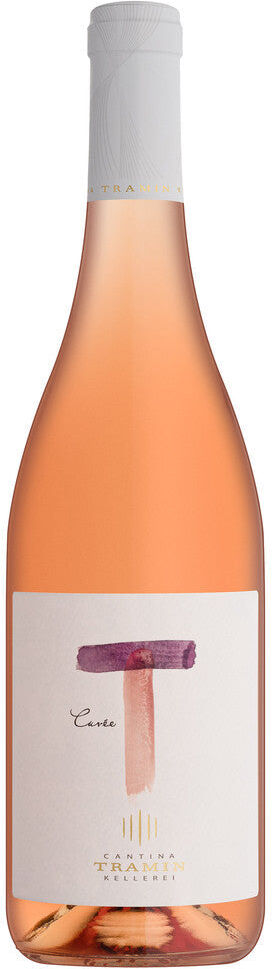
T Rosato Tramin 2024The Rosato ‘Cuvée T’ from the Alto Adige winery Tramin is a bottle characterized by pleasantness and gustatory lightness, qualities that make this rosé wine an ideal choice as a refreshing aperitif. This label belongs to the ‘I Classici’ line, wines born to express the spirit of the Alto Adige territory and made through a selection of the best varieties grown on the alpine slopes in full respect of nature. The passionate and joint work of 160 families has made Tramin one of the most appreciated wine realities in Alto Adige. Tramin Rosato ‘Cuvée T’ comes from a blend of the grape varieties Merlot, Lagrein, and Pinot Nero, grown on the hills at the foot of the Alto Adige Alps at an altitude ranging from 250 to 550 meters. Here, the vines benefit from calcareous-clay soils rich in gravel, as well as from the cool climate characterized by significant daily temperature excursions in summer. In the winery, a short contact between the must and the skins is carried out.sufficient to extract the desired color intensity, followed by gentle pressing. The alcoholic fermentation takes place in temperature-controlled stainless steel tanks, the same type of containers where the wine remains to mature for a few months before bottling. The ‘Cuvée T’ Rosato from Tramin highlights an intense pink color. Fresh and immediate aromas of strawberries and raspberries define the olfactory range, associated with subtle floral hints. A light and fresh sip, intriguing and pleasant, with a delicate finish that recalls the sensations of red fruits perceived on the nose. The Rosato ‘Cuvée T’ is a graceful and gentle interpretation, making it suitable for dishes with delicate flavors such as fish tartare, sushi, or platters of cheeses and lightly aged cured meats.10,00 £*Shipping: 48,00 £Secure redirect to the provider
-
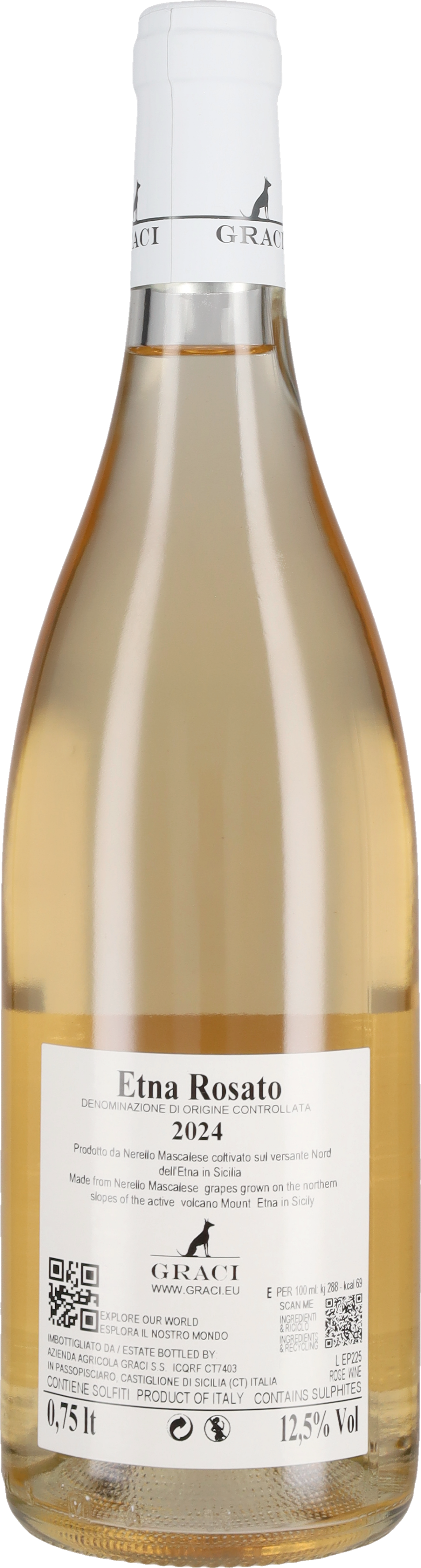
Etna Rosato Graci 2025The Etna Rosato made by Graci embodies all the magic of the wines produced on Etna. A fascinating territory that, in recent years, has had increasing success. The northern slope is where the winery cultivates Nerello Mascalese, an important Sicilian grape that, after skilful vinification, has a beautiful rosé color, with a light hue of copper. A bottle in which freshness and minerality are the key elements, making the sip always compelling and never boring. This Etna Rosato comes from the pure use of a native red grape variety important for Sicilian winemaking, Nerello Mascalese. The grapes of this variety are grown using the alberello system, in vineyards located at an elevation above sea level of about 600 meters. We are located on the northern slope of Etna, within brown soils of volcanic origin, in which we find a great component of skeleton. The grapes, cultivated according to principles that refer to organic farming, once harvested and brought to the winemaking premises of the Graci winery, are destemmed and pressed; then they proceed to fermentation, with indigenous yeasts, in cement tanks. Finally, aging is continued, which lasts for 6 months, again in cement tanks. This Etna Rosato announces itself to the eye with a copper-colored, very subdued appearance. The olfactory profile is interesting, resounding with notes in which it is the small red fruit that plays the leading role, also enhanced by a slight floral nuance. On the palate, it is medium-bodied, balanced, with a sip marked by a pleasant freshness; it ends with a finish of excellent persistence, in which a slight savory flavor is noticeable. A bottle with which Graci transports us to the slopes of the majestic volcano of Etna, showing us, with expressiveness and authenticity, one of the most interesting oenological terroirs of the whole island.17,00 £*Shipping: 48,00 £Secure redirect to the provider


-
When do you use il faut and il ne faut pas?
"Il faut" is used to express what is necessary or required, while "il ne faut pas" is used to express what is not allowed or should be avoided. For example, you would use "il faut" to say "il faut étudier pour réussir" (it is necessary to study to succeed), and "il ne faut pas" to say "il ne faut pas fumer dans ce lieu" (smoking is not allowed in this place). These expressions are used to give advice, make recommendations, or set rules. **
-
Why is it souhaite-t-il and not souhaite-s-il?
In French, the pronoun "il" (he) is combined with the verb "souhaiter" (to wish) to form the phrase "souhaite-t-il" because of the rule of verb inversion in interrogative sentences. When forming a question in French, the subject pronoun and the verb are inverted, so "souhaite-t-il" follows this rule. The "t" is added to create a liaison between the verb and the pronoun, making the pronunciation smoother. **
-
Which song is used in the Ramazzotti Rosato advertisement?
The song used in the Ramazzotti Rosato advertisement is "Ti Sposerò Perché" by Eros Ramazzotti. This song is a romantic and uplifting track that complements the mood and theme of the advertisement, which is centered around love and celebration. The use of this song helps to create a memorable and emotional connection with the audience, enhancing the overall impact of the advertisement. **
-
What comes after il faudrait in French?
In French, "il faudrait" is followed by the infinitive form of a verb. This construction is used to express a suggestion or a polite request. For example, "il faudrait partir tôt" means "it would be necessary to leave early." **

What is an El, Sl, and Il?
An El, Sl, and Il are all suffixes used in the English language to form adjectives. "El" is used to form adjectives that mean "pertaining to" or "characterized by," such as in the word "musical." "Sl" is used to form adjectives that mean "tending to" or "inclined to," such as in the word "careful." "Il" is used to form adjectives that mean "having the nature of" or "capable of," such as in the word "flexible." These suffixes help to create new adjectives by modifying the meaning of the base word. **
How does "il faut" work in French?
"Il faut" is a common expression in French that is used to convey the idea of necessity or obligation. It is followed by an infinitive verb and is used to express what needs to be done or what is necessary in a given situation. For example, "Il faut manger" means "It is necessary to eat." This expression is used to give advice, make suggestions, or express general truths. **
Top-Angebote
Products related to Rosato-Il-Male-Minore:
-
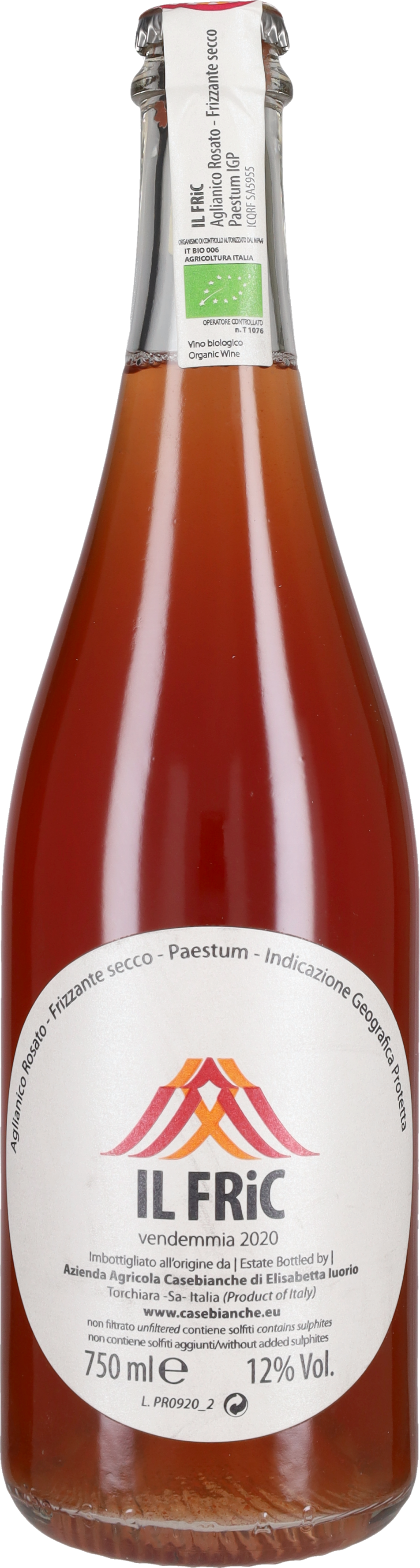
Aglianico Rosato Frizzante 'Il Fric' Casebianche 2020The Aglianico Rosato Frizzante "Il Fric" by Casebianche winery is a young, fragrant wine produced in Torchiara, in the province of Salerno, Campania, in an area bounded by Mount Stella, the Acquasanta stream and the Cilento sea. This label is made from pure Aglianico grapes from the ancient Dellemore vineyard, grown using the Guyot espalier method on soils rich in clay and limestone. The winery was established in 2000 when Elisabetta and Pasquale began tending the family vineyards, carrying out the first experimental vinifications, introducing the organic cultivation method and using natural fertilisers to enrich the soil life. Casebianche's Aglianico Rosato Frizzante "Il Fric" is an unmetered semi-sparkling wine made from carefully selected, hand-picked grapes. Once the grapes reach the winery, they are subjected to direct pressing, after which the must is divided into two parts, one that carries out the alcoholic fermentation, which occurs spontaneously, with indigenous yeasts, in stainless steel containers, and the other part of fresh must that is used as liqueur de tirage for the prise de mousse, the formation of the foam and subsequent re-fermentation in the bottle. This semi-sparkling wine does not undergo disgorgement but is offered whole on its own natural yeasts as per the Ancestral Method. The Rosato '"Il Fric" Frizzante Aglianico Casebianche presents itself to the eye with a lively cherry-pink colour. The nose displays aromas of red berries, including raspberry, strawberry, currant and pomegranate, citrusy hints of mandarin, floral notes of rose and jasmine and a slight hint of spice. In the mouth it is clean, smooth and fresh, characterised by a creamy foam and a mineral and fruity finish. An Aglianico Spumante Rosato, this from the Casebianche winery, which is certainly unusual but nevertheless extremely enjoyable, elegant and pleasant.19,00 £*Shipping: 48,00 £Secure redirect to the provider
-
Rosato Calabretta 2025The Rosato from the Calabretta winery is a delicate, fresh, and fruity expression, vinified in pink and produced in Sicily in the municipality of Randazzo, on the northern slope of Mount Etna. This label is made from pure Nerello Mascalese grapes from ungrafted vines in the Calderara district. The vines, relatively young at about 5 years of average age, are cultivated at high altitudes using the low bush method on volcanic soils characterized by sandy soils mixed with stones and pebbles. The winery is a family-run business, owning about 10 hectares of vineyards, managed by father and son with great care and attention to the territory according to traditional methods and following the principles of organic farming. The Rosato di Calabretta is produced with carefully selected grapes that are hand-harvested at their perfect ripeness. The bunches, upon reaching the winery, are destemmed and subjected to the "pista e mutta", as it is called in the local dialect, meaning a quick pressing and immediate transfer of the must into stainless steel containers without allowing prolonged contact with the skins.stainless steel without allowing prolonged contact with the skins. The alcoholic fermentation takes place just like a white winemaking, in stainless steel containers, using exclusively indigenous yeasts, for a few weeks, after which the wine remains in aging in stainless steel tanks for a few months before being bottled and ready for marketing. The Rosato “Pista e Mutta” presents itself with a bright cerasuolo pink color. On the nose, intense aromas of small red fruits appear, including wild strawberries, cherries, and currants, floral notes of red flowers and Mediterranean scrub, spicy hints of mixed spices and white pepper, finishing with slight mineral hints. On the palate, it is rich, juicy, intense, and fresh, characterized by a beautiful minerality and a pleasantly fruity and persistent finish. This from the Calabretta winery is a sincere rosato, composed and balanced with aromas that are never excessive or showy, making it suitable for any occasion.16,00 £*Shipping: 48,00 £Secure redirect to the provider
-
Rosato Marotti Campi 2025The Rosato from the Marche winery Marotti Campi is a true specialty, made in the beautiful hilly area of Morro d’Alba, with the ancient native red grape variety of the territory. It is a version of Lacrima vinified as a rosé, which surprises with its originality and fragrance of floral aromas, reminiscent of rose and violet, accompanied by a soft and harmonious sip. It is a rosé with a typically local face, perfectly describing the close bond between a grape and its chosen territory. It is a simple and informal label, very suitable to be enjoyed as an aperitif or with light appetizers. The Rosato wine from the Marotti Campi winery is a pure expression of the Marche land and one of the most interesting producers in the Morro d’Alba area. The sunny and always breezy Mediterranean climate, and the soils mainly composed of clays and sands, have always been the cradle of the Lacrima grape, cultivated only in this small corner of the Marche. At the end of the harvest, the selected bunches are pruned in the cellar and immediately subjected to a very delicate pressing, with a short period of contact with the skins to extract a minimum of color, perfumes, and aromas. The must is fermented in temperature-controlled stainless steel tanks. Before bottling, the rosé rests for a period of 4 months in steel tanks. The Lacrima Rosato from the Marche winery Marotti Campi is the result of a selection of the best bunches from the estate's vineyards, which are cultivated on the sunny southeast-facing slopes of the magnificent area of Morro d’Alba, a small and historic Marche village. It is a label that well tells the territory and the expressive nuances that the typical grape of the area can offer. In the glass, it presents itself with a fairly intense, bright, and brilliant cherry pink hue, a sign of good extraction in winemaking. The aromas mainly recall floral fragrances with scents of fresh rose petals, freshly picked violets, wildflowers, and small berries. The sip is harmonious andsoft, with a rich and fragrant fruit and a finish of good freshness. The charm of Lacrima expressed in pink.8,00 £*Shipping: 48,00 £Secure redirect to the provider
-
What is the difference between minore and maggiore?
In Italian, "minore" means "smaller" or "minor," while "maggiore" means "larger" or "major." These terms are often used to compare sizes, ages, quantities, or importance of things. For example, you might use "minore" to describe a younger sibling or a smaller portion of food, while "maggiore" could be used to refer to an older person or a larger amount of money. **
-
What is the difference between il faut que and il faut?
"Il faut" is used to express a general necessity or obligation, while "il faut que" is used to introduce a specific action or event that is necessary or required. For example, "il faut manger" means "it is necessary to eat" in a general sense, while "il faut que tu manges" means "you need to eat" in a specific sense. "Il faut" is used to make a general statement about what is necessary, while "il faut que" is used to specify what needs to be done. **
-
When do you use il faut and il ne faut pas?
"Il faut" is used to express what is necessary or required, while "il ne faut pas" is used to express what is not allowed or should be avoided. For example, you would use "il faut" to say "il faut étudier pour réussir" (it is necessary to study to succeed), and "il ne faut pas" to say "il ne faut pas fumer dans ce lieu" (smoking is not allowed in this place). These expressions are used to give advice, make recommendations, or set rules. **
-
Why is it souhaite-t-il and not souhaite-s-il?
In French, the pronoun "il" (he) is combined with the verb "souhaiter" (to wish) to form the phrase "souhaite-t-il" because of the rule of verb inversion in interrogative sentences. When forming a question in French, the subject pronoun and the verb are inverted, so "souhaite-t-il" follows this rule. The "t" is added to create a liaison between the verb and the pronoun, making the pronunciation smoother. **
Similar search terms for Rosato-Il-Male-Minore
-
T Rosato Tramin 2024The Rosato ‘Cuvée T’ from the Alto Adige winery Tramin is a bottle characterized by pleasantness and gustatory lightness, qualities that make this rosé wine an ideal choice as a refreshing aperitif. This label belongs to the ‘I Classici’ line, wines born to express the spirit of the Alto Adige territory and made through a selection of the best varieties grown on the alpine slopes in full respect of nature. The passionate and joint work of 160 families has made Tramin one of the most appreciated wine realities in Alto Adige. Tramin Rosato ‘Cuvée T’ comes from a blend of the grape varieties Merlot, Lagrein, and Pinot Nero, grown on the hills at the foot of the Alto Adige Alps at an altitude ranging from 250 to 550 meters. Here, the vines benefit from calcareous-clay soils rich in gravel, as well as from the cool climate characterized by significant daily temperature excursions in summer. In the winery, a short contact between the must and the skins is carried out.sufficient to extract the desired color intensity, followed by gentle pressing. The alcoholic fermentation takes place in temperature-controlled stainless steel tanks, the same type of containers where the wine remains to mature for a few months before bottling. The ‘Cuvée T’ Rosato from Tramin highlights an intense pink color. Fresh and immediate aromas of strawberries and raspberries define the olfactory range, associated with subtle floral hints. A light and fresh sip, intriguing and pleasant, with a delicate finish that recalls the sensations of red fruits perceived on the nose. The Rosato ‘Cuvée T’ is a graceful and gentle interpretation, making it suitable for dishes with delicate flavors such as fish tartare, sushi, or platters of cheeses and lightly aged cured meats.10,00 £*Shipping: 48,00 £Secure redirect to the provider
-
Etna Rosato Graci 2025The Etna Rosato made by Graci embodies all the magic of the wines produced on Etna. A fascinating territory that, in recent years, has had increasing success. The northern slope is where the winery cultivates Nerello Mascalese, an important Sicilian grape that, after skilful vinification, has a beautiful rosé color, with a light hue of copper. A bottle in which freshness and minerality are the key elements, making the sip always compelling and never boring. This Etna Rosato comes from the pure use of a native red grape variety important for Sicilian winemaking, Nerello Mascalese. The grapes of this variety are grown using the alberello system, in vineyards located at an elevation above sea level of about 600 meters. We are located on the northern slope of Etna, within brown soils of volcanic origin, in which we find a great component of skeleton. The grapes, cultivated according to principles that refer to organic farming, once harvested and brought to the winemaking premises of the Graci winery, are destemmed and pressed; then they proceed to fermentation, with indigenous yeasts, in cement tanks. Finally, aging is continued, which lasts for 6 months, again in cement tanks. This Etna Rosato announces itself to the eye with a copper-colored, very subdued appearance. The olfactory profile is interesting, resounding with notes in which it is the small red fruit that plays the leading role, also enhanced by a slight floral nuance. On the palate, it is medium-bodied, balanced, with a sip marked by a pleasant freshness; it ends with a finish of excellent persistence, in which a slight savory flavor is noticeable. A bottle with which Graci transports us to the slopes of the majestic volcano of Etna, showing us, with expressiveness and authenticity, one of the most interesting oenological terroirs of the whole island.17,00 £*Shipping: 48,00 £Secure redirect to the provider
-
Rosato Massa Vecchia 2022The Rosato di Massa Vecchia is the light-colored expression of a pioneering project born in 1985 at the foot of the Metalliferous Hills of the high Maremma Toscana by Fabrizio Niccolaini, accompanied by his wife Patrizia Bertolini, both early followers of a production philosophy and an approach to viticulture that respects the vineyard, the specificities of the territory, and nature as a whole. The wines have always been produced artisanally, without the addition of chemical products in the vineyard and cellar and without the aid of invasive technologies, so that each bottle can be a voice and revelation of a territory and its characteristics in an authentic and direct way. The Massa Vecchia Rosato is born from the blend of an indigenous grape variety, Malvasia Nera, which makes up the most important part, and a small percentage of Merlot. The grapes come respectively from Vigna Beruzzo 2 and Vigna Massa Vecchia, both located about 200 m above sea level. The choice of low yields allows for maximum concentration of substance and quality.in the grapes. Harvesting is strictly done by hand and the work in the cellar is carried out in the least invasive way possible: the fermentation occurs spontaneously with indigenous yeasts, a brief maceration on the skins of 12 hours is planned, followed by a maturation period of 18 months in large oak and chestnut barrels, plus a subsequent refinement phase of 6 months in bottle. The Rosato di Massa Vecchia impresses with a surprising aromatic complexity and a refreshing crispness. In the glass, the pink hue is enriched with violet shades. The olfactory notes range in the world of red fruits from cherries to berries and are accompanied by a pleasant spiciness of white pepper on a background of Mediterranean herbs. On the palate, it is smooth with pleasant rustic notes that pair well with a natural sapidity.42,00 £*Shipping: 48,00 £Secure redirect to the provider
-
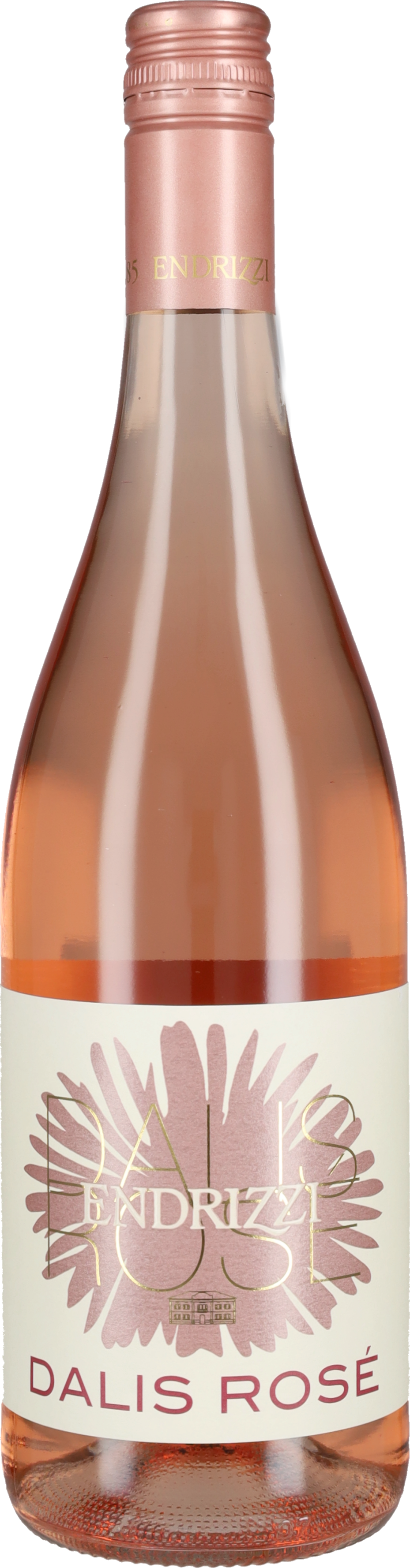
'Dalis' Rosato Endrizzi 2025steel, at a controlled temperature. The wine matures for a few months, always in steel, until bottling operations begin. The "Dalis" Rosé by Endrizzi presents itself visually with a light and delicate color, decidedly transparent, with some violet-orange reflections at the rim. The range of aromas offered to the nose recalls delicate and subtle sensations, where small berries alternate with hints of grapefruit and more mineral elements. On the palate, it has a sip of light structure, developing on a pleasant refreshing texture, where a mineral imprint can be traced. A rosé that, from Trentino, is ready to be uncorked on your tables, ensuring an excellent result when paired with fish-based preparations.steel, at a controlled temperature. The wine matures for a few months, always in steel, until bottling operations begin. The "Dalis" Rosé by Endrizzi presents itself visually with a light and delicate color, decidedly transparent, with some violet-orange reflections at the rim. The range of aromas offered to the nose recalls delicate and subtle sensations, where small berries alternate with hints of grapefruit and more mineral elements. On the palate, it has a sip of light structure, developing on a pleasant refreshing texture, where a mineral imprint can be traced. A rosé that, from Trentino, is ready to be uncorked on your tables, ensuring an excellent result when paired with fish-based preparations.11,00 £*Shipping: 48,00 £Secure redirect to the provider
-
Which song is used in the Ramazzotti Rosato advertisement?
The song used in the Ramazzotti Rosato advertisement is "Ti Sposerò Perché" by Eros Ramazzotti. This song is a romantic and uplifting track that complements the mood and theme of the advertisement, which is centered around love and celebration. The use of this song helps to create a memorable and emotional connection with the audience, enhancing the overall impact of the advertisement. **
-
What comes after il faudrait in French?
In French, "il faudrait" is followed by the infinitive form of a verb. This construction is used to express a suggestion or a polite request. For example, "il faudrait partir tôt" means "it would be necessary to leave early." **
-
What is an El, Sl, and Il?
An El, Sl, and Il are all suffixes used in the English language to form adjectives. "El" is used to form adjectives that mean "pertaining to" or "characterized by," such as in the word "musical." "Sl" is used to form adjectives that mean "tending to" or "inclined to," such as in the word "careful." "Il" is used to form adjectives that mean "having the nature of" or "capable of," such as in the word "flexible." These suffixes help to create new adjectives by modifying the meaning of the base word. **
-
How does "il faut" work in French?
"Il faut" is a common expression in French that is used to convey the idea of necessity or obligation. It is followed by an infinitive verb and is used to express what needs to be done or what is necessary in a given situation. For example, "Il faut manger" means "It is necessary to eat." This expression is used to give advice, make suggestions, or express general truths. **
* All prices are inclusive of VAT and, if applicable, plus shipping costs. The offer information is based on the details provided by the respective shop and is updated through automated processes. Real-time updates do not occur, so deviations can occur in individual cases. ** Note: Parts of this content were created by AI.